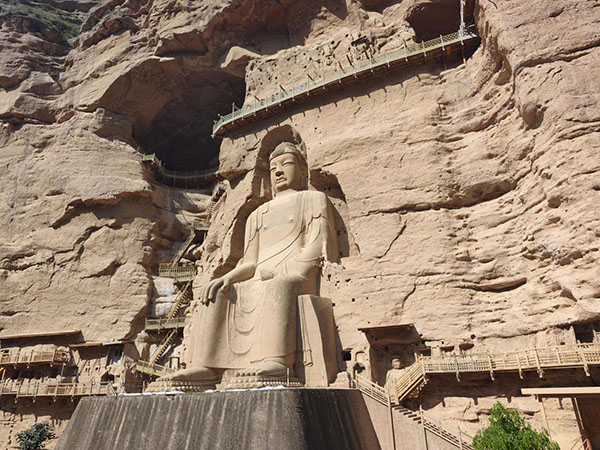
Bingling Temple
Introduction
Bingling Temple, located in Yongjing county, Linxia Hui autonomous prefecture, Gansu province, is one of China's most significant cultural and historical landmarks. This site is part of the Bingling Temple World Heritage Tourist Area, which spans 150 square kilometers and includes the Bingling Stone Forest, Bingling Lake—the largest artificial freshwater lake in northwestern China—and the Yellow River Hydropower Expo Park. The temple is renowned for its Stone Grottoes, which are a UNESCO World Heritage Site and a component of the Silk Road: the Routes Network of Chang'an-Tianshan Corridor. Known for its stunning natural scenery and rich cultural heritage, Bingling Temple serves as a hub for ecological tourism, science education, and leisurely vacations.
History
Origin and Construction
The history of Bingling Temple dates back over 1,600 years, making it one of the oldest Buddhist grotto sites in China. The temple was established during the Western Qin State in 420 AD, as evidenced by the earliest well-preserved statue inscription found in Cave 169. This inscription is a significant historical artifact that provides reliable evidence for the early development of stone statues and grotto art in China. The site was chosen for its tranquil natural setting, ideal for Buddhist practitioners seeking solitude and spiritual enlightenment. Over the centuries, the grottoes were expanded and enriched by contributions from various dynasties, resulting in a complex that now includes 216 numbered caves, 815 stone statues, 1,000 square meters of murals, 56 stupas, and 438 registered cultural artifacts.
Historical Significance
Bingling Temple holds immense historical, artistic, and academic value. The grottoes are often referred to as "the encyclopedia of stone grottoes" due to their comprehensive representation of Buddhist art and culture across different historical periods. The site reflects the spread and evolution of Buddhism in China, showcasing influences from both Tibetan and Han Chinese traditions. As a key junction on the ancient Silk Road, Bingling Temple played a vital role in cultural and commercial exchanges between the East and West. In 2014, the temple was inscribed on the UNESCO World Heritage Site list as part of the Silk Roads: the Routes Network of Chang'an-Tianshan Corridor.
Architecture
Layout and Design
The architectural layout of Bingling Temple is a testament to the ingenuity and craftsmanship of ancient Chinese artisans. The grottoes are carved into the cliffs along the upper reaches of the Yellow River, creating a harmonious blend of natural and man-made beauty. The site features a series of caves and niches, some of which were natural formations modified by craftsmen to include carved niches and reinforced walls. Wooden structures, such as walkways and staircases, provide access to higher caves, including the iconic Cave 169. The temple's design reflects the integration of Buddhist spiritual ideals with the natural environment, creating a serene and contemplative atmosphere.
Notable Features
Among the most notable features of Bingling Temple is the 27-meter-tall Buddha statue carved into the mountain during the Tang Dynasty. This colossal statue is a masterpiece of Buddhist art and serves as the focal point of the grotto complex. Cave 169, located 40 meters above the riverbed, is another highlight, containing the earliest dated inscription in a Chinese grotto. The murals and statues within the caves depict various Buddhist themes and figures, showcasing the artistic styles and cultural influences of different dynasties. The Bingling Stone Forest, with its unique Danxia landscape, adds to the site's visual and geological appeal.
Cultural and Religious Importance
Buddhist Influence
Bingling Temple is a significant site for Buddhist worship and practice. The grottoes and statues reflect the profound influence of Buddhism on Chinese culture and art. The temple served as a spiritual center for the local population and a hub for the spread of Buddhist teachings along the Silk Road. The imagery and inscriptions within the caves provide valuable insights into the religious beliefs and practices of ancient China, as well as the interactions between different Buddhist traditions.
Artistic Contributions
The artistic contributions of Bingling Temple are unparalleled. The murals and sculptures within the grottoes represent the evolution of Buddhist art in China, incorporating indigenous aesthetics and regional beliefs. The craftsmanship displayed in the carvings and paintings is a testament to the skill and creativity of ancient artisans. The site also reflects the extensive cultural exchanges between China and other civilizations through the spread of Buddhism, enriching the country's artistic heritage.
Preservation and Conservation
Efforts to preserve and conserve Bingling Temple have been ongoing since the founding of the People's Republic of China in 1949. The Bingling Temple Cultural Heritage Preservation and Research Institute was established in 1955 to oversee the site's protection. Conservation projects have included restoring murals and statues, reinforcing hazardous rock formations, and installing a comprehensive monitoring and warning system. Digitalization initiatives have also been undertaken to create a digital platform for monitoring the grottoes' environment and cultural artifacts. These efforts ensure the long-term preservation of Bingling Temple's historical and cultural legacy.
Tourism
Visitor Information
Bingling Temple is open to visitors from 9:00 AM to 5:00 PM, Tuesday through Sunday. Admission to the grottoes costs 50 yuan per person, with free entry for children under 14, senior citizens aged 65 and above, people with disabilities, and servicemen. Half-price concessions are available for minors aged 14 to 18, senior citizens aged 60 to 65, and full-time university undergraduates. The recommended way to reach the temple is by shuttle boat from the Liujiaxia Reservoir, offering scenic views of the Yellow River and the surrounding Danxia landscape.
Nearby Attractions
Visitors to Bingling Temple can explore other attractions within the Bingling Temple World Heritage Tourist Area, including the Bingling Stone Forest, Bingling Lake, and the Yellow River Hydropower Expo Park. The nearby Yellow River Stone Forest in Baiyin and the Maiji Mountain Grottoes in Tianshui are also worth visiting. These sites offer a blend of natural beauty and cultural heritage, making Gansu province a must-visit destination for travelers.








